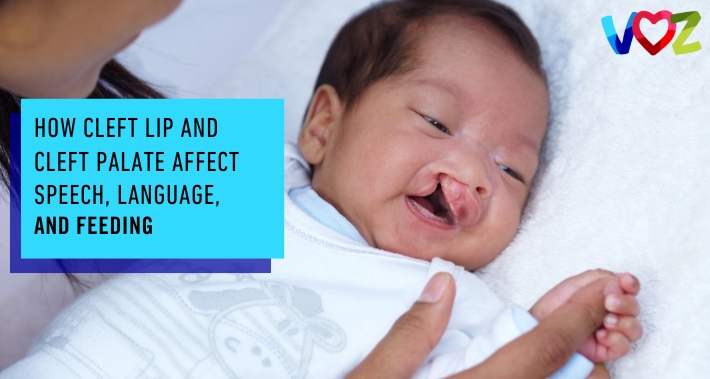
Speech pathologists routinely work with children who have cleft lip and cleft palate.
While these conditions are often discussed within the context of pediatric and surgical care — and rightly so — it’s also important to recognize the critical role that pediatric speech therapy and pediatric occupational therapy play throughout a child’s development.
Children born with cleft lip or cleft palate often experience differences in speech and language development, and in some cases, feeding and swallowing as well.
These challenges can vary widely depending on the type and severity of the cleft, as well as whether other developmental differences are present.
Because cleft lip and cleft palate can affect multiple areas of development, intervention often involves a team-based approach.
Speech therapists support communication and feeding skills, while occupational therapists help children build the fine motor, self-care, and social skills needed for daily life.
When conditions such as autism or ADHD co-occur, these challenges can become more complex and require coordinated care.
In this article, we’ll explore how cleft lip and cleft palate can impact a child’s speech, language, and feeding development, how coexisting conditions may influence these outcomes, and how speech and occupational therapy work together to support your child’s growth.
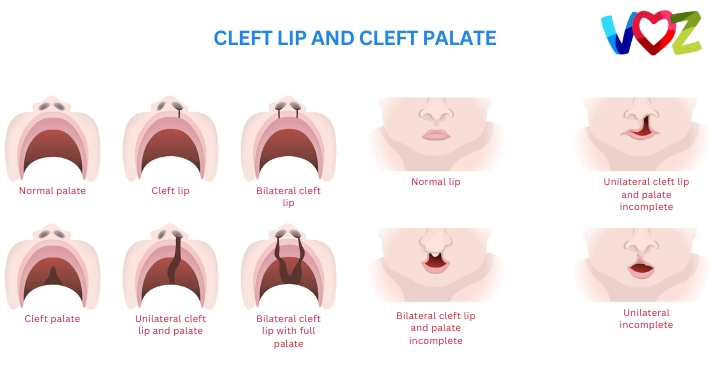
What Is Cleft Lip And Cleft Palate?
They’re considered to be separate from each other, but they often occur together.
They cause an opening or a hole in the lip or roof of the mouth.
They are the most common congenital difference in the United States.
According to the Centers for Disease Control and Prevention (CDC) approximately 1 in 1,050 babies have either a cleft lip or cleft palate.
Doctors diagnose most cases of cleft lip at the time of birth.
However, you might not realize that your baby has a cleft palate until you notice that they’re having feeding difficulties, such as a weak latch or milk coming out of their nose.
Many different factors may increase your risk of having a baby with cleft lip or cleft palate, including:
- Family history of the condition
- Smoking cigarettes during pregnancy
- Misusing drugs or alcohol during pregnancy
- Taking certain medications during pregnancy, such as topiramate
How Cleft Lip And Cleft Palate Affect Speech Development
Both cleft lip and cleft palate can cause differences in speech and language development.
However, we typically see more speech challenges amongst children with cleft palate compared to those with cleft lip.
Nonetheless, it’s important to get your child evaluated by a speech therapist to determine their level of speech difficulty and intervention needs.
There’s a wide range of challenges that can impact children with cleft lip and cleft palate.
For instance, some children speak with distorted sounds because their condition causes differences in how their teeth develop.
Others simply develop their speech skills at a slower pace than the expected speech developmental milestones.
Next, we’ll take a closer look at some of the specific differences we commonly see in children with cleft lip and cleft palate.
1. Hypernasality
Hypernasality is a type of resonance disorder.
Children with hypernasality often sound as if their voice is coming from their nose.
That’s because air is travelling the wrong way as your child produces speech.
Proper vocal resonance requires the passage of air through your mouth to create sound vibrations.
In contrast, a cleft palate can allow air to escape out of the mouth and through the nose.
This creates a nasal sounding resonance.
Cleft palate is just one of the potential causes for hypernasality.
Other causes include:
- A short palate
- Oral muscle weakness
- Cerebral palsy
RELATED ARTICLE: How Can Speech Therapy Help With Hypernasality Disorder?
2. Articulation Disorder
Articulation disorders, or speech sound disorders, is an umbrella term that includes multiple different conditions that cause altered speech sounds.
Broadly speaking, it includes two distinct categories: functional articulation disorder, and organic articulation disorder.
Functional articulation disorders occur without any obvious cause.
In contrast, organic articulation disorder occurs due to a variety of type of motor, neurological, or structural factors.
Children with cleft lip and cleft palate often develop organic articulation disorders due to the structural differences of their mouths.
Thus, cleft lip and cleft palate are one of the known causes of articulation disorders.
You may notice your child has trouble producing certain sounds, such as ‘sh’ or ‘th’.
This may prompt them to avoid words that use those sounds, or substitute sounds.
Other children with articulation disorders add extra sounds to their words.
Speech therapy can help identify your child’s specific articulation challenges and practice solutions.
RELATED ARTICLE: Speech Therapy Treatments For Articulation Disorders
3. Voice Disorders
Voice disorders impact your vocal quality.
This includes a variety of vocal components, such as:
So, as you might expect, the symptoms of a voice disorder can largely vary depending on your specific condition.
A speech therapist can help children with cleft lip and cleft palate work through many different types of voice disorders.
For instance, some children with cleft lip or cleft palate develop dysarthria, which is a type of voice disorder that causes you to distort your vowels or slur your consonants.
Other children experience breathiness and hoarseness due to their cleft lip or cleft palate.
Other causes for voice disorders include:
- Vocal overuse
- Laryngitis
- Vocal cord paralysis
- Cysts, nodules, and other cancerous or noncancerous growths
- Certain neurological disorders, such as spasmodic dysphonia
RELATED ARTICLE: Speech Therapy For Voice Disorders
4. Autism
Autism is a type of neurological difference that impacts brain development and learning processes.
Largely speaking, it has two categories of traits: repetitive behaviors and social communication differences.
But what does autism have to do with cleft lip and cleft palate?
More than you might think.
A 2024 paper by Cook Et Al. reviewed the literature on autism in kids with cleft lip and palate.
It found that kids with a cleft were more likely to be autistic than kids who don’t.
Since we don’t yet know the exact cause(s) of autism, it’s hard to pinpoint the reason behind this.
However, what we do know is that cleft lip and cleft palate can create extra communication challenges for autistic children.
For instance, autistic children may become nonverbal due to frustration and overstimulation surrounding their cleft lip or cleft palate speech challenges.
Speech therapy can help autistic children with cleft lip or cleft palate improve their speech and language challenges.
RELATED ARTICLE: What Are The Hallmark Early Signs Of Autism?
5. ADHD
Attention deficit hyperactivity disorder (ADHD) is difference in brain development.
These differences can lead to a variety of symptoms, including inattentiveness, impulsivity, and concentration challenges.
There are three different types of ADHD: predominantly inattentive, predominantly hyperactivity-impulsive, and mixed type.
While we’re still unsure of the exact cause(s) of ADHD, we know it has something to do with genetics.
In other words, you’re more likely to have ADHD if you have a parent with the condition.
But how can ADHD affect speech and language development?
And further, how does cleft lip and cleft palate influence this?
The same study we looked at in the last section also found kids with clefts were more likely to have ADHD.
And like in autistic children, cleft lip and cleft palate can worsen the speech difficulties common among kids with ADHD, such as volume and speech rate control.
How Speech Therapy Can Help Treat Cleft Lip And Cleft Palate
A speech therapist plays a vital role in cleft lip and cleft palate intervention.
Your child’s speech therapist will work with a team of professionals, which may include:
- Audiologists
- Dentists
- Nutritionists
- Ear, nose, and throat (ENT) doctors
- Nurses
- Orthodontists
- Plastic surgeons
- Social workers
- Occupational therapists
A speech therapist will help ensure that your child’s cleft lip or cleft palate isn’t interfering with their speech and language development.
The first step is an evaluation.A
We commonly assess babies with cleft lip and cleft palate starting at 18 months of age and may recommend a second evaluation at 24 months.
A pediatric feeding disorders specialist also can help address any feeding and swallowing challenges.
RELATED ARTICLE: Speech Therapy For Kids With Feeding And Swallowing Disorders

How Occupational Therapy Can Help Treat Cleft Lip And Cleft Palate
A pediatric occupational therapist can work closely with your child’s speech therapist.
Children with cleft lip and cleft palate often show certain developmental differences, and an occupational therapist can help.
For example, some of the above diagnoses often come with fine motor skills deficits.
Fine motor skills are important skills children use to do many different things, including:
- Picking up and putting down objects
- Eating and drinking
- Learning to write and draw
- Fastening buttons
- Tying their shoes
- Brushing their teeth
- And much more
Your occupational therapist can help your child develop these skills.
As well, clefts can sometimes cause low self-esteem in children.
This can make them reluctant to participate in social interactions, making their self-esteem worse.
An occupational therapist can help your child practice their social interaction skills and help facilitate different social participation opportunities.
RELATED ARTICLE: Why Some Kids Struggle With Handwriting And How Occupational Therapy Helps
Book Your Appointment With The Voz Institute Today
Learning that your child has a cleft lip or cleft palate can feel overwhelming, but with the right care team, these challenges are highly manageable.
Speech therapy and occupational therapy play an essential role in supporting your child’s speech, feeding, motor skills, and overall confidence as they grow.
When coexisting differences such as autism or ADHD are present, early, coordinated intervention becomes even more important.
With individualized therapy, children with cleft lip and cleft palate can make meaningful progress in communication, daily skills, and social participation.
At The Voz Institute, our experienced team of therapists work collaboratively to support your child’s unique needs every step of the way.
Book your appointment with The Voz Institute today and take the next step toward helping your child thrive.
1100 H St NW Ste 940,
Washington, DC 20005
(202) 734-4884
- https://g.page/vozspeechtherapy
The Voz Institute is a bilingual speech therapy and pediatric occupational therapy clinic in Washington, DC that provides individualized services based on the specific needs of you or your child. Therapy sessions are provided in English or Spanish, depending on your or your child’s native language.
1100 H St NW Ste 940,
Washington, DC 20005
(202) 734-4884
- https://g.page/vozspeechtherapy
El Instituto Voz es una clínica bilingüe de terapia del habla y terapia ocupacional pediátrica en Washington, DC, que ofrece servicios individualizados según las necesidades específicas tuyas o de tu hijo. Las sesiones de terapia se ofrecen en inglés o español, dependiendo del idioma nativo tuyo o de tu hijo.