Many people seek help from speech therapists for all types of different concerns.
In fact, you likely know at least one person who has participated in speech therapy at some point during their childhood.
For example, many children undergo speech therapy to help correct their lisps or treat their stutter.
Or perhaps you’re interested in speech therapy as an adult.
At The Voz Institute, we help both children and adults overcome a wide range of speech and language challenges.
For children, we also offer pediatric occupational therapy to support sensory regulation, motor coordination, and everyday functional skills that often impact autistic kids alongside communication.
But did you know that speech therapy can also benefit autistic individuals from all walks of life?
Many autistic children face challenges surrounding both their verbal and nonverbal communication skills.
Without intervention, these challenges can continue throughout your adult life.
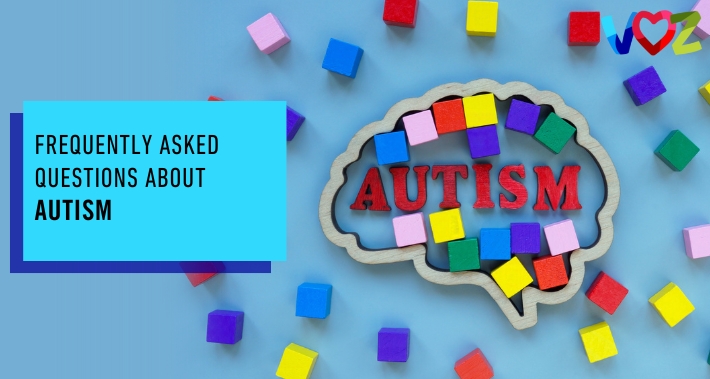
Let’s take a look at some of the most frequently asked questions surrounding speech therapy and autism.
What Is Autism?
Autism spectrum disorder (ASD) is a type of developmental condition that affects brain development and learning processes.
Autistic individuals experience life differently than their nonautistic peers.
These differences typically involve several components of everyday life.
Examples include:
- Cognitive processes, such as having rigid interests and executive dysfunction
- Sensory processing, such as experiencing sensory overload or difficulty surrounding sensory perception
- Motor skills, such as delayed milestone achievement or balance and coordination challenges
- Communication, such as speaking challenges or difficulty understanding nonverbal cues
- Socialization, such as difficulty following social rules and interpreting the feelings of others
- Everyday living tasks, such as challenges surrounding self care and housekeeping tasks
It’s important to note that, like all aspects of autism, these challenges exist on a spectrum.
In other words, some autistic people experience more difficulties in some areas than others.
Some people require more support than others.
Every autistic person experiences life and autism in their own unique ways.
Autistic people come from all different types of backgrounds, including race, class, age, and gender.
Do Adults Grow Out Of Being Autistic?
Autism is a lifelong experience.
Autistic children are born autistic, although most children don’t receive a diagnosis before their first birthday.
Many autistic people consider autism an inherent part of their identity.
That’s why we use identity first terminology (autistic person) versus person first terminology (person with autism).
A 2023 study by Taboas et al., found that the vast majority of autistic individuals prefer identity first language.
Identity first language allows us to highlight the fact that autism encompasses virtually all aspects of one’s identity.
How Common Is Autism?
Autism is a relatively common diagnosis.
According to the U.S. Centers for Disease Control and Prevention, approximately 1 in 36 children are autistic.
However, some people believe that the autism prevalence is even greater than this statistic implies.
Many factors may contribute to an underdiagnosis of autism.
For instance, some people have limited access to psychological services due to finances.
Others live in a rural community and can’t travel to a specialist who diagnosis autism.
Finally, some people are hesitant to seek a diagnosis due to stigma and fear of discrimination.

Why Does It Seem Like More People Are Autistic These Days?
“It seems like everyone is autistic these days!”
Does this quote sound familiar?
Indeed, many people believe that modern physicians hand out autism diagnoses too eagerly.
Although the number of autism diagnoses is rising, it’s important to understand that such an increase doesn’t necessarily mean that these diagnoses are invalid or exaggerated.
Experts are still working to understand the exact reasons behind this increase.
However, it’s likely that a better understanding of the disorder plays a significant role.
For instance, more and more experts are beginning to understand the different presentations of autism amongst boys and girls.
Many autistic girls experience autism in less noticeable ways than their male peers.
Thus, some physicians might misdiagnose autistic girls with other conditions, such as anxiety, depression, and personality disorders.
RELATED ARTICLE: What Are The Hallmark Early Signs Of Autism?
How Can I Tell If My Child Is Autistic?
So, if autism looks different for everyone, how can you tell if your child is autistic?
Fortunately, there’s certain characteristics you can watch out for in your child.
For instance, many autistic children have rigid, restrictive interests.
They might face challenges sharing these interests with others or exhibit a reluctance to discuss anything that doesn’t involve these interests.
Difficulties with social interactions and communication are another common autistic trait.
Autistic children sometimes experience difficulty figuring out when it’s their turn to speak in a conversation.
They might also misinterpret social cues, such as facial expressions or body language.
Finally, some autistic children are partially or completely nonverbal.
Of course, not every autistic child will display the same characteristics, or to the same severity.
RELATED ARTICLE: How Can AAC Help Nonspeaking Autistic Children Communicate?
Why Are People Autistic?
Experts haven’t pinpointed an exact cause for autism.
Here’s what we do know:
Autism is likely the result of a combination of genetic and environmental factors.
For instance, some genetic syndromes play a role in autism prevalence.
Examples include Rhett’s syndrome and fragile X syndrome.
We also know what doesn’t cause autism.
Vaccines, environmental chemicals, or dietary preferences won’t increase your chances of having an autistic child.
RELATED ARTICLE: Why Do People Still Believe These Autism Myths?

What Should I Do If My Child Is Autistic?
Your child’s pediatrician can refer you for autism screening with a specialist.
Unfortunately, there isn’t a blood test or brain imaging scan that can detect autism.
Instead, a specialist will examine your child and look for certain behavioral characteristics.
Specifically, they will look for characteristics surrounding social communication, social interaction, and restrictive and repetitive behaviors.
RELATED ARTICLE: How Can A Speech Therapist Help With Autism Spectrum Disorder?
Is There A Cure For Autism
No, autism doesn’t have a cure, and this isn’t necessarily a bad thing.
Autism isn’t a deficit but rather a normal part of human diversity.
Autism advocates push for better societal acceptance for autistic individuals.
Unfortunately, society often fails to accommodate autistic people and their unique needs.
For instance, many autistic people face unemployment due to their socialization challenges.
Thus, more societal inclusion for autistic people would render a cure unnecessary.
RELATED ARTICLE: Looking At Social Communication Disorder
Can Autistic Kids Live Happy Lives?
Yes, autistic kids are just as capable of living happy lives as anyone else.
Sure, they often face certain challenges.
But then again, what child doesn’t?
The most important thing that any parent of an autistic child can do is seek help for their child’s challenges and encourage their unique strengths.
How Does Autism Affect Speech?
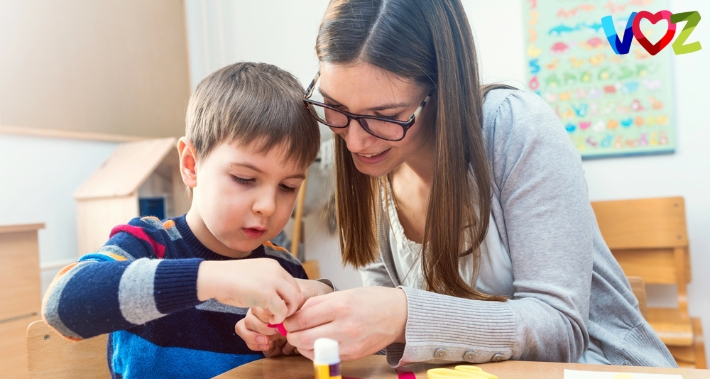
Ausitic kids often experience some degree of speech and communication challenges.
Many of these challenges involve coordination difficulties.
Think about the amount of coordination your body relies on for speech production.
Your brain, mouth, tongue, and facial muscles must all work together to produce speech.
Some autistic kids face challenges with such coordination.
Others have trouble regulating the volume of their voice.
They might talk too quietly or louder than expected.
Echolalia is another common speech concern for autistic kids.
Kids with echolalia repeat certain words or phrases they hear.
Finally, a significant number of autistic kids are either partially or completely nonverbal.
At The Voz Institute, we can help your autistic child with all their speech and language concerns.
Our team of therapists will work with you and your child to highlight their unique needs and challenges.
We’ll start by conducting an assessment before creating a specialized treatment plan that addresses both your child’s strengths and challenges.
RELATED ARTICLE: Are Autism And Stuttering Linked?
Book Your Appointment With The Voz Institute Today
Raising an autistic child comes with unique questions, strengths, and challenges — and you don’t have to navigate them alone.
With the right support, your child can build meaningful communication skills, confidence, and independence in everyday life.
At The Voz Institute, our speech therapists specialize in helping autistic children communicate in the way that feels most natural and effective for them, whether through spoken language, AAC, or a combination of strategies.
And because communication is only one part of your child’s developmental journey, our pediatric occupational therapists are also here to support sensory needs, fine motor skills, and daily living tasks that help your child participate more comfortably in their world.
Together, these therapies can help your child thrive at home, in school, and in their community.
Book your appointment with The Voz Institute today and take the first step toward empowering your child’s growth and communication.
1100 H St NW Ste 940,
Washington, DC 20005
(202) 734-4884
- https://g.page/vozspeechtherapy
The Voz Institute is a bilingual speech therapy and pediatric occupational therapy clinic in Washington, DC that provides individualized services based on the specific needs of you or your child. Therapy sessions are provided in English or Spanish, depending on your or your child’s native language.
1100 H St NW Ste 940,
Washington, DC 20005
(202) 734-4884
- https://g.page/vozspeechtherapy
El Instituto Voz es una clínica bilingüe de terapia del habla y terapia ocupacional pediátrica en Washington, DC, que ofrece servicios individualizados según las necesidades específicas tuyas o de tu hijo. Las sesiones de terapia se ofrecen en inglés o español, dependiendo del idioma nativo tuyo o de tu hijo.