Speech language pathologists have an abundance of experience developing articulation skills in people of all ages.
At The Voz Institute, many of our clients come to our clinic for speech sound disorders therapy.
But “speech sound disorders” is an umbrella term that refers to a number of different disorders.
One of the most common types is articulation disorder.
Thankfully, a Voz speech therapist can help minimize these risks.
Your speech therapist will spend time exploring all the contributing factors to your articulation disorder.
We’ve talked about speech therapy for articulation disorders before, but today we’ll be doing a deep dive into its causes.
Read on to find out more.
RECAP: What Is An Articulation Disorder?
Articulation is an important aspect of communication.
You need proper articulation for clear and concise speech.
Different words require unique and specific sound production.
For instance, the word “articulation” contains five syllables, but each of those syllables has a number of different speech sounds in it.
An articulation disorder occurs when you have trouble producing speech sounds correctly.
Many young children mispronounce a variety of words.
Therefore, an articulation disorder is typically only diagnosed in children aged 4 and up.
What’s Causing Your Articulation Disorder?
Many different factors may play a role in the development of an articulation disorder.
Below, we’ve highlighted a few.
1. A Motor Speech Disorder
People with motor speech disorders experience brain disruptions that interfere with their speech process.
Let’s take a closer look at two common examples.
Childhood Apraxia Of Speech
Childhood apraxia of speech interrupts the signals between your brain and mouth.
It’s also sometimes referred to as “verbal dyspraxia” or “developmental apraxia”.
Children with apraxia of speech typically known what they want to say.
However, they have trouble using their mouths to produce the appropriate sounds.
They typically have trouble with their lip and tongue formation for proper pronunciation.
Dysarthria
Dysarthria is another motor speech disorder.
It occurs due to nervous system damage and affects your ability to control a variety of muscles necessary for speech, including your tongue, larynx, and jaw.
Like apraxia of speech, people with dysarthria understand language but have trouble expressing their thoughts verbally.
Dysarthria can be either developmental or acquired.
Developmental dysarthria occurs following nervous system damage in utero.
Conversely, acquired dysarthria occurs due to nervous system damage later in life.
Acquired dysarthria is usually a result of a neurological disorder, like:
- Traumatic brain injury
- Brain tumors
- Dementia
- Degenerative brain diseases, such as Alzheimer’s or Parkinson’s disease
- Multiple sclerosis
- Strokes
2. Developmental Delays
Developmental delays are common contributing factors for articulation disorders.
In particular, children with speech and language developmental delays are at higher risk for experiencing an articulation disorder.
Speech therapists measure your child’s speech and language progress through a set of developmental milestones.
For instance, babies are typically expected to start babbling and imitating sounds by 6 months and speak their first few words by 12 months.
Children who don’t meet these milestones are sometimes diagnosed with an articulation disorder.
Like motor speech disorders, speech and language developmental delays often have their own causes as well.
However, in many cases the cause is unknown.
3. Hearing Loss
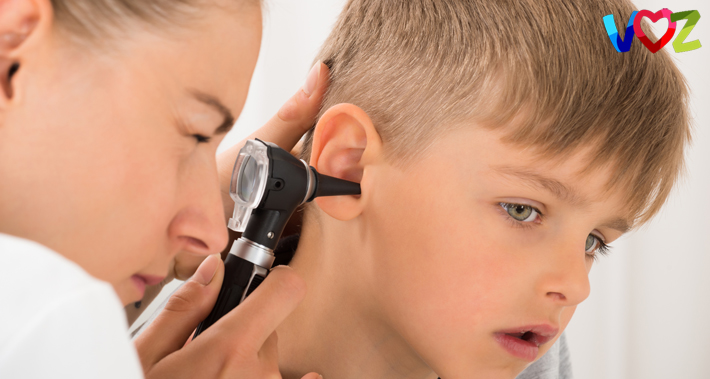
Hearing loss can affect speech development.
It also frequently contributes to the development of articulation disorders.
After all, it’s difficult to learn how to properly pronounce different speech sounds if you have trouble hearing others pronounce them.
Childhood hearing loss can range from mild to severe.
Some children are born with hearing loss.
Others acquire hearing loss throughout childhood for a variety of reasons, such as:
- Ear infections (otitis media)
- Head injuries
- Ear damage due to loud noise
- Meningitis
- Genetics
Regardless of the cause, children with hearing loss have trouble with both learning and understanding different speech sounds.
Consequently, children with hearing loss commonly experience impairments in multiple important skills, such as:
- Reading
- Speaking
- Social skills
- Academic performance
4. Autism Spectrum Disorder
Autism spectrum disorder is a neurodivergent condition.
That means it affects the way the brain develops.
Autistic children have distinct differences in their neurochemistry compared to allistic kids.
These differences can affect your child’s learning and development.
Consequently, autism can affect speech and language development.
This can include things like:
- Repetitive speech patterns
- Difficulty communicating and regulating emotions
- Social skills differences
- Difficulty controlling vocal pitch and volume
Additionally, autistic kids often have difficulty paying attention to the sounds around them.
Neurotypical people generally notice the sounds around them naturally.
Conversely, autistic children must practice noticing those same sounds.
They also frequently have trouble connecting the sounds they hear to words or thoughts.
This difficulty may occur for multiple reasons.
For instance, some autistic kids have trouble verbally conveying their words and thoughts.
Others have more of a word mapping problem.
As a result, speech sound disorders are more common in autistic kids.
5. Cleft Lip And/Or Cleft Palate
Many kids with articulation disorders are born with either a cleft lip or cleft palate.
A cleft lip is diagnosed in children born with a split in their lips.
This split most commonly occurs in the middle of the upper lip; however, it may also occur down the side of the lip.
Cleft lips may also impact your child’s upper jaw, gums, and nose.
A cleft palate is diagnosed when the split extends to the roof of your child’s mouth.
Cleft lips and cleft palates are routinely corrected through surgical methods.
However, even after surgery, they may lead to speech differences, including articulation and resonance disorders.
6. Other Possible Causes
We’ve only touched on a few of the many possible causes of articulation disorders.
Many other factors may contribute to your child’s articulation difficulties.
These include:
- Genetics
- Cerebral palsy
- Down syndrome
- Muscular dystrophy
- Hypotonia
- Lead poisoning
In many cases, however, the exact cause of an articulation disorder isn’t known.
Regardless of the cause, it’s important to remember that it’s not your fault.
If your child has an articulation disorder, it doesn’t mean that you’ve failed as a parent.
But regardless of the cause, a speech therapist at The Voz Institute can help.
We can help your child develop their speech and language skills and build confident communication skills.
Book Your Appointment With The Voz Institute Today
We hope you’ve found this blog post informative.
At The Voz Institute, we pride ourselves on client education and satisfaction.
If you still have questions surrounding articulation disorders or any other aspect of your child’s speech and language development, don’t hesitate to reach out to us.
We’re happy to answer any and all of your questions and look forward to booking your first appointment with us.
Book your appointment with The Voz Institute today to find out more about our transformative services.
1100 H St NW Ste 940,
Washington, DC 20005
(202) 734-4884
- https://g.page/vozspeechtherapy
The Voz Institute is a bilingual speech therapy and pediatric occupational therapy clinic in Washington, DC that provides individualized services based on the specific needs of you or your child. Therapy sessions are provided in English or Spanish, depending on your or your child’s native language.
1100 H St NW Ste 940,
Washington, DC 20005
(202) 734-4884
- https://g.page/vozspeechtherapy
El Instituto Voz es una clínica bilingüe de terapia del habla y terapia ocupacional pediátrica en Washington, DC, que ofrece servicios individualizados según las necesidades específicas tuyas o de tu hijo. Las sesiones de terapia se ofrecen en inglés o español, dependiendo del idioma nativo tuyo o de tu hijo.