One of the first questions many parents ask after learning their child has cerebral palsy is, “What happens next?”
Questions about development, independence, therapy, and long-term quality of life often follow close behind.
Because cerebral palsy affects every child differently, the answers are rarely simple.
Some children experience mild movement differences, while others require more extensive support with mobility, communication, self-care, or everyday activities.
Understanding your child’s unique strengths and challenges is an important first step toward finding the right forms of support.
Occupational therapy is one of the many interventions that can help children with cerebral palsy build important life skills and participate more fully in daily routines.
In this article, we’ll take a closer look at what cerebral palsy is, common symptoms and causes, and the different ways pediatric occupational therapy can support your child’s development and independence over time.
What Is Cerebral Palsy?
Cerebral palsy is a group of neurological disorders that affect movement, balance, posture, and muscle control.
It is caused by abnormal brain development or damage to the developing brain before, during, or shortly after birth.
People with cerebral palsy commonly experience challenges with mobility and muscle coordination.
However, your child’s exact symptoms will depend on the areas of the brain affected and the severity of the condition.
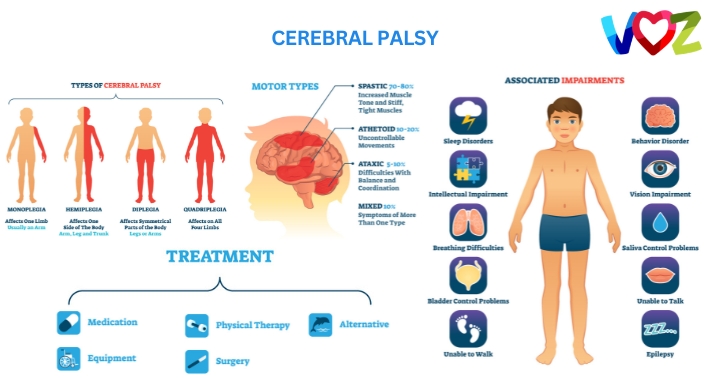
Cerebral palsy is often grouped into several main movement-based types, including:
- Spastic cerebral palsy
- Dyskinetic cerebral palsy
- Ataxic cerebral palsy
- Mixed cerebral palsy
Spastic cerebral palsy is the most common type.
Mixed cerebral palsy means a child shows features of more than one movement pattern.
If your child has mixed cerebral palsy, you’ll notice a variety of symptoms that are common with two or more subtypes.
What Are The Main Causes Of Cerebral Palsy?
Cerebral palsy happens when the developing brain is affected by abnormal development or injury.
This can occur before birth, during delivery, or in early infancy.
In some cases, the exact cause is never fully known.
Possible contributing factors include premature birth, low birth weight, infections, problems with blood flow or oxygen to the brain, and other complications that affect early brain development.
In some cases, cerebral palsy develops before birth, while in others it is linked to complications during delivery or early infancy.
Many cases of cerebral palsy begin during pregnancy or around the time of birth, although some children are diagnosed only after developmental differences become more noticeable over time.
What Are Cerebral Palsy Symptoms?
Most children with cerebral palsy experience movement, coordination, and postural challenges.
Beyond this, however, your child’s symptoms will largely depend on their specific cerebral palsy subtype and the severity of the condition.
Some of their symptoms may include:
- Fine motor developmental delays
- Speech and language delays
- Gait challenges
- Floppy or stiff muscles
- Exaggerated reflexes
- Involuntary tremors or shaking
- Uncontrollable drooling
- Eating and swallowing impairments
- Having diminished strength in one side of the body
- Seizures
- Intellectual impairments
- Vision challenges
Some children with cerebral palsy may also have co-occurring developmental conditions, including autism, which can affect how they communicate, play, and interact with others.
RELATED ARTICLE: Frequently Asked Questions about Autism
However, your child’s symptoms may take a few months or even years to appear.
They may also improve or worsen throughout your child’s development.
Healthcare providers classify cerebral palsy symptoms using the Gross Motor Function Classification System (GMFCS).
This system helps describe the level of mobility and motor skill impairment in people with cerebral palsy.
For instance, GMFCS level 1 refers to someone with mild cerebral palsy symptoms who can walk and move without support.
Conversely, GMFCS level 5 refers to someone who needs intensive support to move and control their muscles.
How Is Cerebral Palsy Diagnosed In Babies?
Your child will need a cerebral palsy diagnosis before they can access intervention services.
This diagnosis helps your child’s care team better understand their movement challenges, developmental needs, and which therapies may be most appropriate.
Your child’s physician will utilize a variety of diagnostic tools.
They’ll start with taking a full medical history and examining symptoms.
They may also use brain imaging technology to evaluate your child’s condition.
Depending on your child’s needs, the evaluation may include developmental assessments, a neurological exam, and imaging such as an MRI to look more closely at the brain.
How Occupational Therapy Can Help Children With Cerebral Palsy
If your child has cerebral palsy, they may need some extra support as they develop.
This can include occupational therapy for cerebral palsy.
Occupational therapists help children build the skills they need for everyday life, including play, self-care, school tasks, and greater independence.
In pediatric therapy, “occupations” refers to the daily activities that matter most in childhood, such as dressing, feeding, playing, learning, and participating in routines at home and school.
In therapy, these goals are often supported through play-based and developmentally appropriate activities.
Let’s take a closer look at the different goals of occupational therapy for cerebral palsy.
1. Building Fine Motor Control
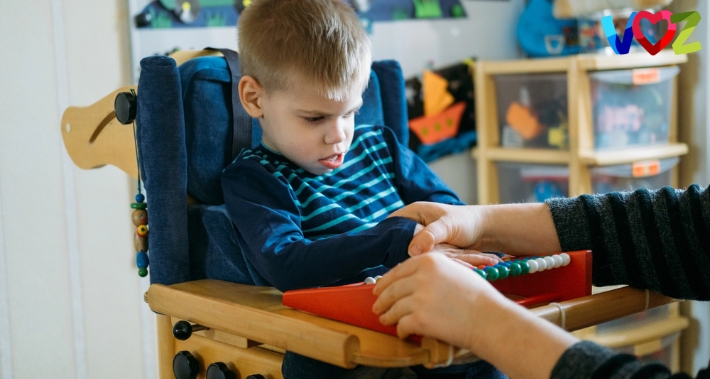
Motor control is a common challenge among children with cerebral palsy.
Your pediatric occupational therapist can use targeted activities to help improve these skills over time.
For instance, your child’s therapist can work on their muscle strength and hand manipulation.
They can also incorporate therapeutic exercises that encourage your child to practice using their pincer grasp.
Ultimately, these exercises will help your child develop the fine motor control necessary for tasks such as writing and eating.
RELATED ARTICLE: Why Some Kids Struggle With Handwriting And How Occupational Therapy Helps
2. Building Self-Care Skills
It’s easy to take our self-care skills for granted.
But for children with cerebral palsy, these skills often require concentrated effort and frequent practice.
An occupational therapist can incorporate exercises to help your child improve and learn to perform various self-care tasks independently.
Examples include getting dressed, brushing teeth, toileting, and eating.
3. Building Eye-Hand Coordination
Eye-hand coordination refers to your ability to synchronize hand movements with visual inputs.
In simple terms, it’s what allows you to catch a ball that your friend throws to you.
Children with cerebral palsy often experience difficulties with this skill.
Occupational therapy can help by practicing eye-hand coordination tasks, such as drawing, playing catch, or doing arts and crafts.
4. Improving Upper Body Strength
Many children with cerebral palsy have muscle tone, postural control, and movement challenges that can affect upper-body strength and stability.
Your child’s occupational therapist can help develop their upper-body strength by focusing on trunk-stability exercises.
They can also help strengthen the muscles in your child’s arms, wrists, and shoulders.
For instance, they might introduce tummy play, encouraging your child to read or play on their stomach.
They can also incorporate crawling during therapy.
5. Building Bilateral Coordination
Bilateral coordination is what allows you to control both sides of your body simultaneously.
If cerebral palsy is interfering with your child’s bilateral coordination, an occupational therapist can help.
During therapeutic exercises, they’ll encourage your child to move using both sides of their body simultaneously.
They can also incorporate activities that encourage these types of movements, including clapping games, playing with Play-Doh, and cutting materials for arts and crafts.
6. Referral To A Speech Therapist
Cerebral palsy can frequently affect a child’s speech development as well.
If that’s the case, your occupational therapist may recommend working with a speech therapist as well.
Many children with cerebral palsy benefit from a team approach that may include occupational therapy, physical therapy, and speech therapy, depending on their needs.
Together, they can help your child build their strengths and their self-confidence.
Book Your Appointment With The Voz Institute Today
A cerebral palsy diagnosis can bring many questions about your child’s future, development, and independence, but the right support can make a meaningful difference.
Occupational therapy helps children strengthen the motor, coordination, and self-care skills they need to participate more confidently in daily life.
From improving feeding abilities and handwriting to building upper body strength and bilateral coordination, therapy is designed around your child’s unique strengths and challenges.
Many children with cerebral palsy also benefit from pediatric speech therapy to support communication, speech clarity, feeding, swallowing, and language development as they grow.
Early, individualized intervention can help your child build confidence, independence, and important life skills over time.
Book your appointment with The Voz Institute today and take the next step toward supporting your child’s development and long-term success.
1100 H St NW Ste 940,
Washington, DC 20005
(202) 734-4884
- https://g.page/vozspeechtherapy
The Voz Institute is a bilingual speech therapy and pediatric occupational therapy clinic in Washington, DC that provides individualized services based on the specific needs of you or your child. Therapy sessions are provided in English or Spanish, depending on your or your child’s native language.
1100 H St NW Ste 940,
Washington, DC 20005
(202) 734-4884
- https://g.page/vozspeechtherapy
El Instituto Voz es una clínica bilingüe de terapia del habla y terapia ocupacional pediátrica en Washington, DC, que ofrece servicios individualizados según las necesidades específicas tuyas o de tu hijo. Las sesiones de terapia se ofrecen en inglés o español, dependiendo del idioma nativo tuyo o de tu hijo.