Cerebral palsy can look different for every child, but many families share similar questions when they first receive the diagnosis.
You might be wondering how it will affect your child’s movement, independence, or ability to communicate with others.
Because cerebral palsy impacts muscle tone, coordination, and motor control, it can influence everything from walking and self-care tasks to speech, feeding, and social interactions.
Supportive therapies play an important role in helping children build these everyday skills.
Pediatric occupational therapy can foster greater independence with activities like dressing, writing, or using eating utensils, while speech therapy can strengthen communication, feeding, and oral-motor abilities.
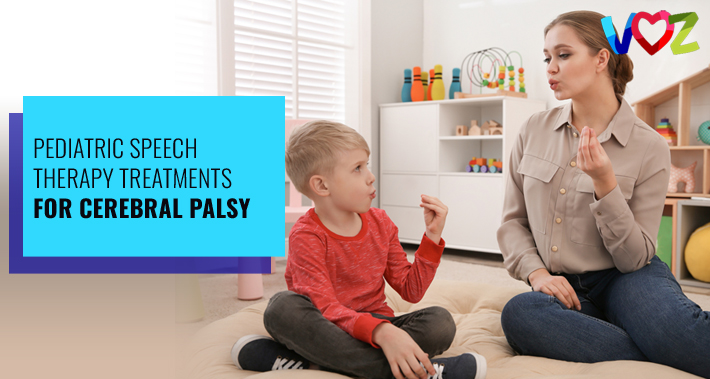
For many families, speech therapy for children with cerebral palsy becomes a key part of helping their child express themselves clearly and participate more fully at home, in school, and in the community.
Understanding how cerebral palsy affects movement, development, and communication is the first step in knowing how to support your child.
In this article, we’ll explore what cerebral palsy is, how it can influence speech and motor skills, and the many ways therapy can help your child thrive.
Let’s take a look.
What Is Cerebral Palsy?
Cerebral palsy is a neurological condition — often present from birth — that affects muscle control, coordination, and movement.
It occurs due to damage or abnormalities in the developing brain, usually before or during birth.
According to Cerebral Palsy Guide, approximately 90% of cerebral palsy cases develop before or during birth.
However, it can also occur in early childhood.
Children with cerebral palsy experience damage in their cerebellum at some point during development.
The cerebellum is the part of your brain that is responsible for controlling your muscle movement.
Cerebral palsy can vary in its severity and affect different areas of the body.
If your child has cerebral palsy, they will likely experience some level of difficulty with their motor skills, muscle tone, and balance.
This can affect things like their ability to walk, speak, swallow, and perform tasks independently.
Speech therapy can be a valuable tool for children with cerebral palsy to improve their quality of life and help them be more independent.
RELATED ARTICLE: Speech Therapy For Kids With Feeding And Swallowing Disorders
Types Of Cerebral Palsy
There are multiple different types of cerebral palsy.
Each type causes different movement patterns and muscle coordination difficulties.
The most common types include spastic, dyskinetic, and ataxic cerebral palsy.
Spastic cerebral palsy causes muscle stiffness and tightness.
This can affect mobility and cause difficulties with fine motor skills.
Spastic cerebral palsy is the most common subtype.
According to a 2020 study by Patel Et Al. it accounts for approximately 35% of cerebral palsy cases.
Dyskinetic cerebral palsy involves involuntary and uncontrolled movements.
Your child might experience difficulty controlling their posture and performing precise movements.
Ataxic cerebral palsy results in problems with balance, coordination, and depth perception.
Some children have mixed cerebral palsy, which is a combination of two or more subtypes of cerebral palsy.
Understanding the type of cerebral palsy that your child has is important.
It allows their speech therapist to create therapies and interventions that address your child’s unique needs.
It can also help determine what types of occupational therapy interventions are necessary.
Finally, knowing your child’s specific cerebral palsy subtype will also help you understand the best way to support your child.
Symptoms Of Cerebral Palsy
Cerebral palsy has many different symptoms, and they can vary depending on your child’s type of cerebral palsy and severity.
Common symptoms include difficulties with motor skills and movement, such as muscle stiffness, poor coordination, atypical reflexes, and fine motor skills delays.
If your child has cerebral palsy, they may experience developmental delays, such as crawling, sitting, and walking.
Speech and language differences are also common.
This may include differences with articulation, language development, and understanding verbal instructions.
Other symptoms can include muscle weakness, tremors, seizures, and impaired vision or hearing challenges.
It’s important to note that symptoms can range from mild to severe.
As a result, each person with cerebral palsy will have a unique combination of symptoms.
Are Parents To Blame For A Child With Cerebral Palsy?
As a parent, you might have some guilt surrounding your child’s diagnosis.
However, it’s important to not blame yourself.
Drinking or smoking during pregnancy may lead to cerebral palsy, but otherwise it’s almost certainly not your fault.
Factors that lead to cerebral palsy are often beyond your parental control.
These can include prenatal infections, genetic conditions, complications during labor and delivery, premature birth, or asphyxia.
It’s important to understand that cerebral palsy is not the result of any of your actions or behaviors during pregnancy or birth.
Blaming parents for a child’s condition can cause unnecessary guilt and misunderstanding.
Instead, it’s important to focus on providing support and resources to help parents and children navigate the challenges of cerebral palsy.
Is There A Cure For Cerebral Palsy?
Currently, there is no known cure for cerebral palsy.
Cerebral palsy is a lifelong condition caused by brain damage or abnormalities.
However, there are therapies and interventions available for your child.
These can help to manage and improve your child’s quality of life.
These may include physical therapy, occupational therapy, speech therapy, medications, assistive devices, and surgeries.
Early intervention is particularly important, as it can help optimize outcomes and provide the best support for your child.
Research continues to explore new possibilities and potential treatments.
This offers hope for improved therapies in the future.
Is Cerebral Palsy A Progressive Disorder?
Cerebral palsy is not considered to be a progressive disorder.
This means the symptoms of cerebral palsy don’t generally worsen over time.
However, it’s important to note that the symptoms and challenges common in people with cerebral palsy can change as your child grows and develops.
This is because factors such as growth spurts and hormonal changes can greatly influence your child’s cerebral palsy symptoms.
Similarly, cerebral palsy brain damage doesn’t progress with age.
However, managing symptoms and addressing any new difficulties that arise is an ongoing process.
RELATED ARTICLE: Speech Therapy For Traumatic Brain Injury Recovery
How Does Cerebral Palsy Affect Speech?
Cerebral palsy can significantly affect your child’s speech and communication abilities.
Because cerebral palsy affects the muscles and coordination required for speech, your child may experience various speech related challenges.
One of these challenges is with articulation.
Articulation refers to your child’s ability to form clear speech sounds when they speak.
Children with cerebral palsy may have more difficulty producing clear sounds.
As a result, their speech may be slurred, distorted, or difficult to understand.
This is what’s known as a speech sound disorder.
Cerebral palsy can also affect the coordination of the muscles involved in speech.
You might notice that your child experiences problems with breath control, voice quality, and fluency.
Your child may also have delayed speech and language development.
This might include difficulties with understanding and using words effectively.
This can also affect your child’s ability to communicate.
Let’s take a look at how speech therapists can help your child.
RELATED ARTICLE: How Can Cerebral Palsy Affect A Child’s Speech Development?
How Do Speech Therapists Help With Cerebral Palsy?
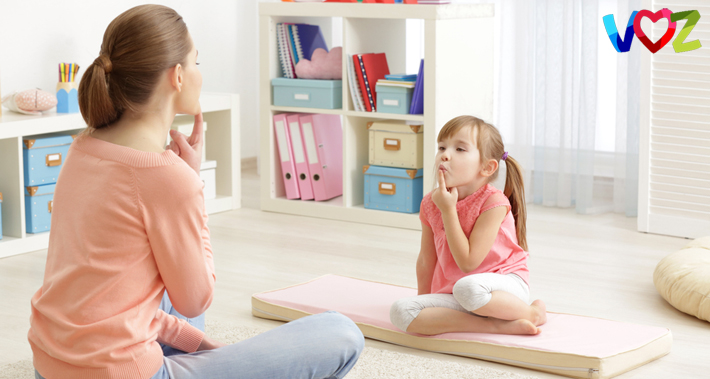
Pediatric speech therapy plays a crucial role in helping your child improve their speech and communication abilities.
A speech therapist can work with your child on their articulation, language development, and overall communication skills.
First, your child’s speech therapist will assess their speech during their first appointment.
Your child’s speech therapist will also work together with you, their school, and other caregivers to understand their communication needs.
Once we understand your child’s specific needs, we’ll be able to formulate a speech therapy plan that’s tailored for their unique needs.
Usually, the goal of speech therapy for cerebral palsy is to help your child improve their speech clarity, pronunciation, and understanding of language.
Fostering independent communication for your child is key.
Building your child’s confidence and ability to communicate at home, in the community, and at school is the primary goal.
One way to do this is to incorporate augmentative and alternative communication (AAC) into your child’s repertoire of speech strategies.
AAC can be as simple as sign language, or complex as using a tablet or other device for communication.
For some children, AAC is their primary method of communication (VIDEO) due to difficulties with spoken language.
For other children, AAC might just aid in their spoken language and help them develop new language skills.
Altogether, AAC can help your child’s ability to express themselves independently.
How Can An Occupational Therapist Help With Cerebral Palsy?
Pediatric occupational therapy can help children to develop the skills they need to navigate their daily lives.
This often involves things like fine motor skills, social skills, self care skills, and more.
Because cerebral palsy can affect motor skills development, kids with cerebral palsy often benefit from occupational therapy.
Your pediatric occupational therapist can help your child develop the skills they need to do things like:
- Tie their shoes
- Get dressed
- Open and close their backpack
- Zip up their jacket
- Use a spoon, knife, and fork
- Draw and write
- Brush their teeth
- Use the bathroom
- Make friends
- Do their homework
- And others
Book Your Appointment With The Voz Institute Today
Navigating a cerebral palsy diagnosis can feel overwhelming at first, but with the right support, your child can continue to learn, grow, and build meaningful independence.
Speech therapy plays a powerful role in helping children strengthen communication, motor coordination, and confidence in their daily interactions.
Combined with occupational therapy, these interventions can support everything from clearer speech to improved self-care and participation at school and at home.
Early, individualized therapy can make a remarkable difference in your child’s long-term development and quality of life.
At The Voz Institute, our team of therapists is committed to providing thoughtful, evidence-based support designed around your child’s unique strengths and needs.
Book your appointment with The Voz Institute today and take the next step toward helping your child reach their fullest potential.
1100 H St NW Ste 940,
Washington, DC 20005
(202) 734-4884
- https://g.page/vozspeechtherapy
The Voz Institute is a bilingual speech therapy and pediatric occupational therapy clinic in Washington, DC that provides individualized services based on the specific needs of you or your child. Therapy sessions are provided in English or Spanish, depending on your or your child’s native language.
1100 H St NW Ste 940,
Washington, DC 20005
(202) 734-4884
- https://g.page/vozspeechtherapy
El Instituto Voz es una clínica bilingüe de terapia del habla y terapia ocupacional pediátrica en Washington, DC, que ofrece servicios individualizados según las necesidades específicas tuyas o de tu hijo. Las sesiones de terapia se ofrecen en inglés o español, dependiendo del idioma nativo tuyo o de tu hijo.